Check Qwen-Image-2.1's Transparent Background Generation Together with Its Research License
Key Takeaway
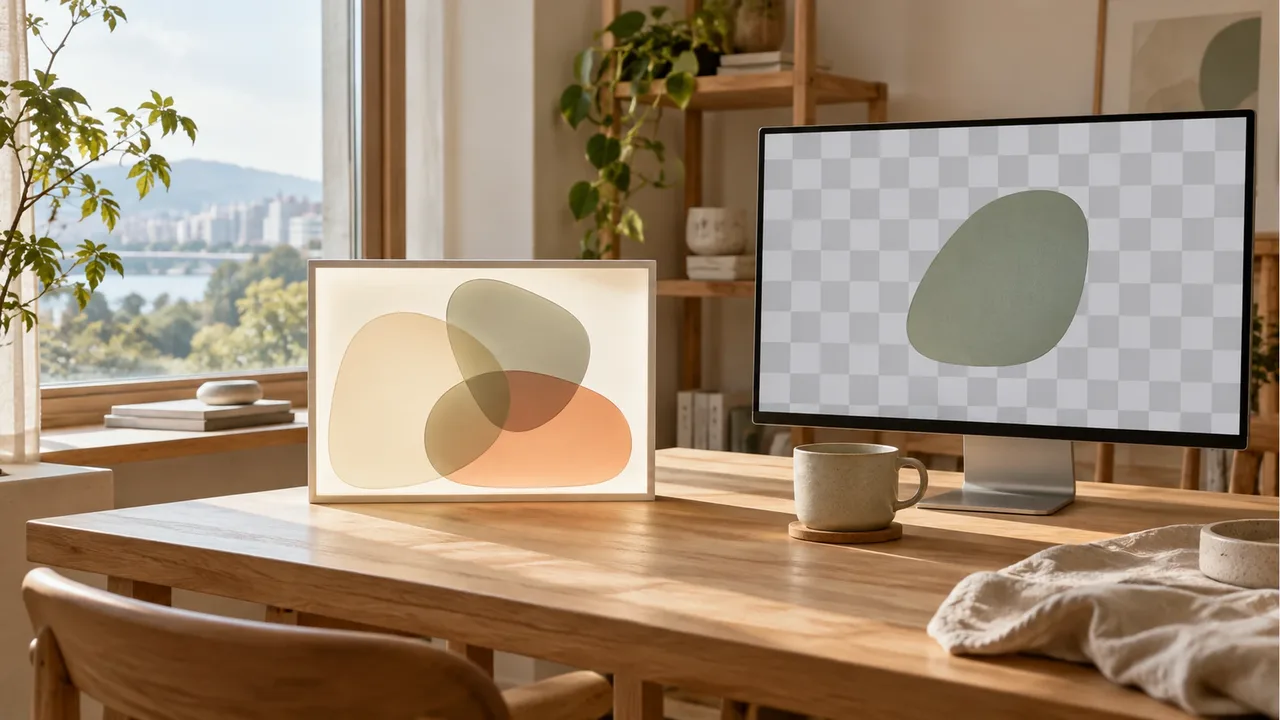
Qwen-Image-2.1 is Qwen's open model that both creates images from text and edits existing images in one model. For graphics work, the standout is that it can produce transparent-background (RGBA) images directly.
The weights are under the Qwen Research License, though, so commercial work needs a separate agreement.
What changed in this version?
The model card sums up four improvements.
- The visual generation component is lighter at 7B parameters (32 Single-Stream DiT layers).
- One model creates regular or transparent-background images from text, edits transparent layers, and extracts subjects from photos.
- It accepts up to 10 reference images. You mark the area to edit with circles, painted annotations, or a separate mask, and it supports edits that preserve the identity of people and products.
- Typography, portrait lighting, and fine textures are said to be better.
The last item is the direction Qwen describes, and the card gives no measurement conditions for it.
How do I request a transparent-background image?
The card has a separate recommended prompt format for transparent images. You open with a statement that it is an RGBA image with transparency, and close by saying the image has an alpha channel and the background is transparent. The subject goes in between.
If you often make cut-out assets such as icons, stickers, or product shots on a clean background, this format is worth testing first. Whether it actually saves a separate background-removal step only shows up when you try it with your own material.
What sizes can it produce?
The aspect ratios and pixel sizes listed in the card's sample code are as follows.
| Aspect ratio | Size (width×height) |
|---|---|
| 1:1 | 2048×2048 |
| 4:3 / 3:4 | 2400×1792 / 1792×2400 |
| 3:2 / 2:3 | 2528×1696 / 1696×2528 |
| 16:9 / 9:16 | 2752×1536 / 1536×2752 |
Checked on 2026-10-17 against the Hugging Face model card. The samples use 40 inference steps, and the card does not say how other sizes behave.
What do I need to run it in my environment?
It runs through QwenImage21Pipeline in Hugging Face diffusers. The card's install instructions call for torch 2.4 or later, transformers 5.17 or later, the latest diffusers from GitHub, accelerate, and pillow. Since this is a GitHub build rather than a released diffusers version, it is safer to create a separate virtual environment instead of mixing it into your existing setup.
The sample code assumes a CUDA GPU. The card gives no GPU memory figure, only a CPU offload setting for when memory runs short. To see whether your GPU can handle it, start with a smaller aspect ratio and work up.
What should I look at in the license before commercial work?
The Qwen Research License (September 20, 2026) lets you use, modify, and distribute the model and documentation for non-commercial purposes only. Non-commercial here means research or evaluation only. To use it commercially, you must request a separate commercial license from Qwen.
A few other clauses matter for practitioners.
- When you distribute the model or derivatives, include a copy of the license and the specified notice text.
- If you use the model or its outputs to build or improve an AI model that you make available, prominently display something like "Built with Qwen" in the documentation.
- Do not use Qwen as the primary name of a derivative product. A descriptive phrase like "fine-tuned from Qwen Image" is allowed.
Client deliverables, assets for sale, and ad creative all lean toward commercial use. Get the actual scope of an agreement by contacting Qwen directly. This post does not replace a reading of the license.
How do I choose between it and other open models from the same period?
FLUX 3 Image Klein, released on October 15, 2026, also highlights editing with 10 reference images. The decisive difference between the two models is the license. Klein makes an exception for commercial outputs by users under US$5M in annual revenue, while Qwen-Image-2.1 is limited to research and evaluation.
Generating transparent backgrounds directly in the model appears only on the Qwen-Image-2.1 card. For research or internal draft comparisons, run both models on the same reference images; for deliverables, filter by license first.
Make one transparent-background asset in the demo Space
Before installing, make one transparent-background asset in the Hugging Face demo Space using the recommended format. Drop the downloaded file into your design tool and check whether it really has an alpha channel and whether the edges are clean, and you can judge whether this feature suits your work.
The date checked is 2026-10-17. License terms can change, so reopen the LICENSE file on the model card right before you use it.
Frequently Asked Questions
Can I put images made with Qwen-Image-2.1 into paid work?
The Qwen Research License attached to the model card permits only non-commercial use for research or evaluation. It says you must request a separate commercial license from Qwen to use it commercially.
How do I ask for a transparent-background PNG?
The model card shows a recommended prompt format that states the image is RGBA with a transparent background. It also describes editing transparent layers and extracting subjects from photos with the same model.
Can I see results before installing anything?
The model card links a Hugging Face demo Space and ModelScope. The card does not say which features the demo exposes or what usage limits apply.
Sources & Verification Date
- Qwen-Image-2.1 model card (Hugging Face, Qwen) · Verified
- Qwen RESEARCH LICENSE AGREEMENT (2026-09-20) · Verified